The method of affinity purification has transformed the process by which researchers acquire high-quality polyclonal antibodies. This method can be used to achieve cleaner, more reliable results in diagnostics, therapeutics, and research applications by selectively isolating antibodies with the greatest specificity.
The polyclonal antibodies, which are custom made, in most instances have undesirable proteins that may affect the accuracy of the experiment. Affinity purification causes these impurities to be eliminated, improving the antibody functions and lowering the background noise. This is a time-saving process that yields reproducible results to the highest degree of confidence in data.
As the research targets become more complex, precision is now more important than ever. The affinity purification is not only more specific but also preserves the integrity of antibodies thus it is suitable in sensitive assays, functional studies, and clinical research work where a loss in accuracy is not an option at all.
Explore how affinity purification can elevate your custom polyclonal antibodies and optimize your research outcomes in the sections below.
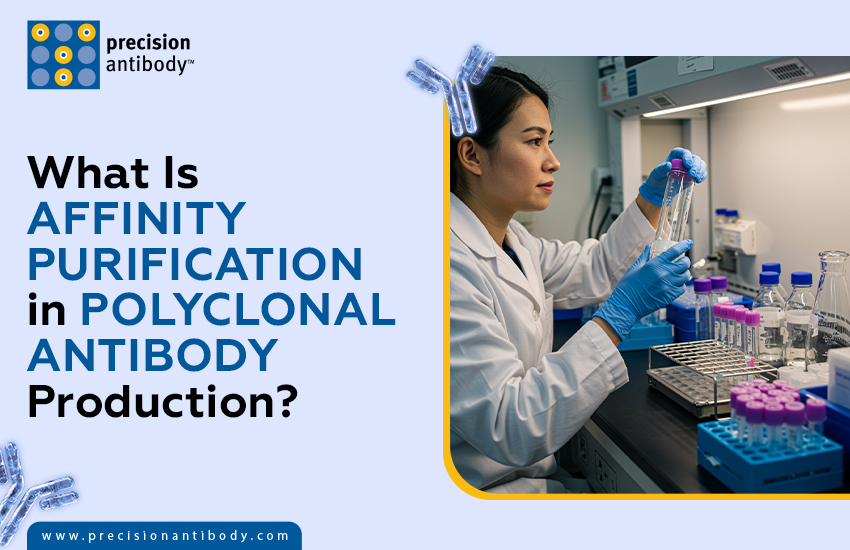
Affinity purification identifies antibodies specific to a target antigen. The antigen is bound to a solid surface and only the relevant antibodies are trapped and the non-specific proteins are washed away. This guarantees greater purity, better specificity, and greater dependability for research and diagnostic use.
Affinity purification specifically enriches target-specific antibodies in comparison to protein A/G or crude serum purification which selects antibodies in a broad way by either class or Fc region. This minimizes noise in the background, increases the accuracy of the experiment and makes it suitable for sensitive assays or experiments that need the accurate and repeatable performance of the antibodies.
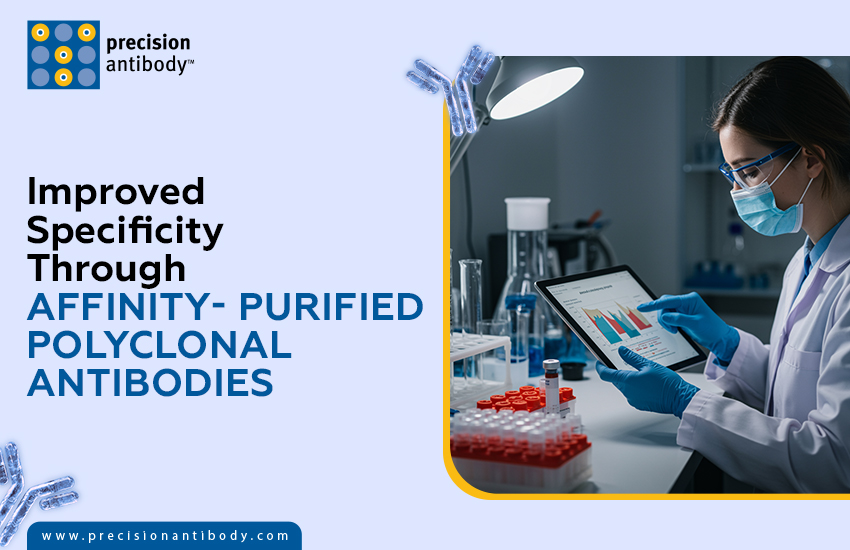
Affinity purification is used to increase the specificity of polyclonal antibodies and provide clear, reliable and reproducible results of an experiment. It is optimal for sensitive detection and accurate research use because selective isolation of antibodies binding to the target antigen minimizes unproductive interactions and enhances confidence in assay results.
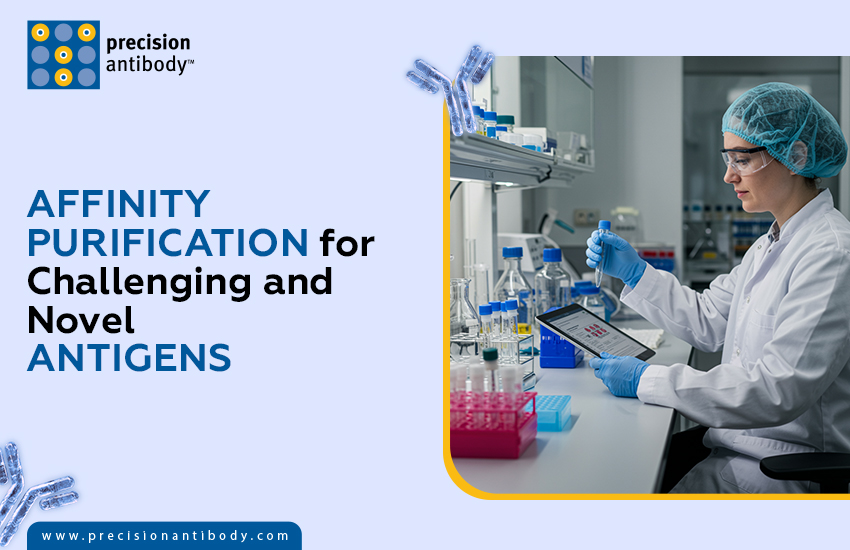
The affinity purification method is especially useful for antibodies of challenging or novel antigens. This can be used to obtain meaningful binding and detection of low-immunogenicity antigens or structurally complex antigens by selectively enriching antibodies that recognize them.
To achieve the highest possible quality of the antibodies and the success of the experiment, one has to consider the correct choice of the affinity purification method thoroughly. The design of the antigen used, elution of the antibodies, and balancing between yield and specificity are some of the factors that determine the purity, functionality and reliability of the resultant polyclonal antibody preparation.
Precision antibody uses superior affinity purification to provide you with high specificity, reproducible and reliable polyclonal antibodies that meet your research requirements. With target-specific enrichment we can guarantee that antibodies work in an optimum manner even in the most sensitive applications.
Collaborate with Precision Antibody and achieve superior research results using purity, specificity, and performance in a single polyclonal antibody. Get in touch with our experts and start planning your project today and find out what it feels like to work with antibodies that are really purified with affinity.
Q1: What is the main advantage of polyclonal antibodies over monoclonal antibodies?
Polyclonal antibodies identify multiple epitopes within a single antigen, enhancing binding and signal amplification. For example, if the antigen changes a little or is in low amounts a polyclonally bound will have the ability to still bind and produce stronger signals for more reliable detection compared to a single-target monoclonal antibody.
Q2: How to purify polyclonal antibodies?
You can purify polyclonal antibodies in a couple of ways, such as Protein A/G chromatography, or ammonium sulfate precipitation. The most precise of these is affinity purification, in which only antibodies that bind to your desired antigen or target stick, filtering out unwanted proteins and leaving a clean, more specific antibody solution with which to do your experiments.
Q3: What is the specificity of polyclonal antibodies?
Polyclonal antibodies are naturally recognizing multiple parts of an antigen and thus are more effective in action. With affinity purification, you can make them more focused, selecting only antibodies bound to your target. This maintains their strength while optimizing unintended binding in complex samples.