Selecting the right antibody can significantly impact the effectiveness, precision and sustainability of your drug discovery efforts. Many programs begin by choosing between custom developed antibodies and the convenient off-the-shelf reagents. This first decision can really affect timelines, budgets and the overall success later on.
Each method has its own merits but finding the best one comes down to how complicated your target is what your assay needs are and what your long term treatment goals are. Understanding these variations can help you prevent costly delays and improve performance in the future.
Choosing the proper sort of antibody that meets your program’s goals is highly helpful at every level, from discovery to validation to optimization to scale up. It’s not about which one is “better” but which one makes the most sense for you in terms of strategy.
Curious about how each choice affects accuracy, speed and overall success down the line? Keep going with your program’s best next step begins with this decision.

Off-the-shelf antibodies are ready-made, commercially available tools that are designed for common targets. They are great for early screening, feasibility studies or projects that need quick, verified solutions without any customisation because they are easy to get to, give accurate performance statistics and cost less up front.
You can obtain custom antibodies produced precisely for your target’s structure, biology and what you need them for. They are the best solution for new targets, therapeutic programs or assays that demand customized performance since they are more specific, flexible in design and consistent over time.
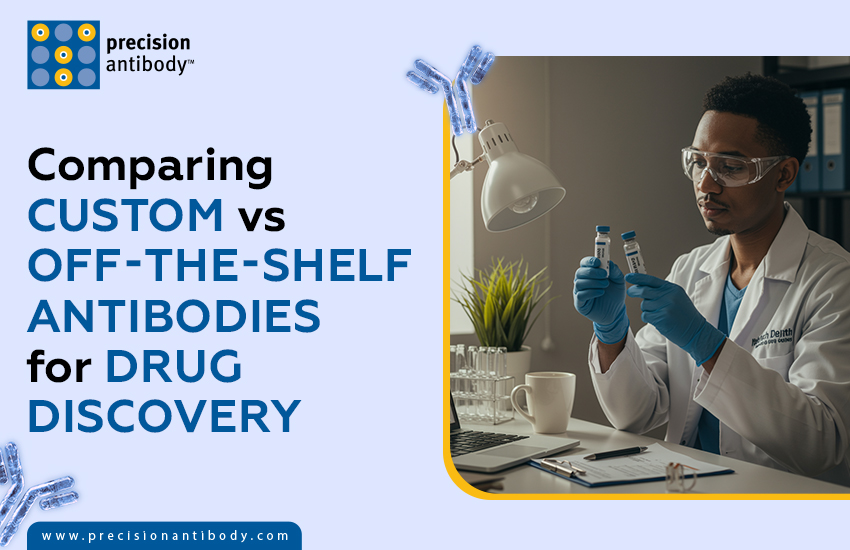
When choosing between custom and off-the-shelf antibodies, think about factors like specificity, speed, scalability and regulatory requirements. Every option has its pros, but pick one that fits your goals, timeline and how much control you want over performance, ownership and future growth.
| Factor | Custom Antibodies | Off-the-Shelf Antibodies |
|---|---|---|
| Specificity | High; tailored for unique or complex targets | Moderate; optimized for common targets |
| Availability | Takes time to develop and validate | Immediately accessible |
| Cost | Higher upfront investment | Lower initial cost |
| Scalability | Designed for long-term, consistent production | May face variability across batches or vendors |
| IP Ownership | Complete control and exclusive rights | No ownership; widely available |
| Regulatory Readiness | Strong alignment with therapeutic pathways | Generally research-grade, not built for clinical translation |

When choosing the proper antibody type, you have to think about scientific, regulatory and practical issues. If teams take the time to learn how each element influences assay performance, project duration and long-term development goals, they may make informed decisions that support both their current research demands and their future therapeutic aims.
Targets that are new, unusual, or hard to structure often need special techniques. Custom antibodies provide you the accuracy you need for hard epitopes, but off-the-shelf choices may only work for well-known antigens that have a lot of reagents ready to use.
Different assays require varying levels of sensitivity, specificity and consistency. When picking an antibody, it’s important to make sure it aligns with what the assay needs and its performance standards. This way, you can steer clear of any problems while optimizing.
Therapeutic programs or items that need to follow strict rules generally prefer bespoke antibodies since they are easy to own and can be made for a long time. Reagents that are off-the-shelf aren’t exclusive, which can limit their use later on.
If you’re on a tight schedule off-the-shelf antibodies are ready to use right away. Custom antibodies take some time to develop, but they really pay off in the long run with their consistency and scalability which is especially great for therapeutic or diagnostic products.
Budget plays a big role in early choices but it’s important to see costs within your overall development plan. Off-the-shelf options save you money upfront but custom antibodies can help avoid extra costs down the line.

Custom antibodies offer benefits that go well beyond initial discovery, ensuring reliable performance, easier regulatory navigation and enhanced market positioning. Their customized design and managed development process make them particularly useful for therapeutic and diagnostic programs that need accuracy and lasting dependability, resulting in advantages like:

Precision Antibody uses scientific knowledge, cutting edge technology and strict quality standards to make personalised antibodies that help you reach your specific research and treatment goals. Every project is done with care to make sure it is very particular, works well every time and fits with your long-term programme goals.
Want to boost your drug programme with successful antibodies? Check out how Precision Antibody’s custom solutions can raise your assays, enhance your pipeline and provide your programme with a strategic edge.
Q1: Is it worth investing in a custom antibody?
Getting a custom antibody can really pay off, especially if your project needs high specificity, covers new targets or demands long term reliability. Even though the initial cost is a bit steep, the advantages in performance, meeting regulations and being able to grow in the future usually make it worth it.
Q2: What are the quality control steps in Precision Antibody’s custom development process?
Precision Antibody really focuses on quality control throughout the entire process. They take care of everything from validating the target to testing binding specificity, assessing affinity and checking for consistency in each batch. This process ensures that antibodies are up to the highest research and therapeutic standards before they’re delivered.
Q3: How do IP rights work for custom antibody projects?
Clients keep all of their intellectual property rights for custom antibody projects, including exclusivity and the freedom to use their work for business. This makes sure that proprietary designs, sequences and applications stay safe and can be used for study, diagnosis or treatment without any restrictions from other parties.