Immunogenicity is a major challenge in developing therapeutic antibodies. It can lead to unwanted immune responses which may lower the drug’s effectiveness or cause side effects. A small immune response can trigger anti drug antibodies, potentially disrupting pharmacokinetics, safety and patient outcomes. Early assessment of immunogenicity is crucial for successful clinical translation.
To prevent immunogenicity it’s all about really understanding how the immune system recognizes things and designing molecules carefully. Scientists are using advanced computational modeling, epitope mapping and antibody humanization to spot and remove immunogenic areas before clinical testing. These steps help keep antibodies effective, safe and well tolerated for different patient groups.
Today’s antibody engineering focuses more on prevention than on fixing issues. Integrating predictive immunogenicity screening, optimized frameworks and human-like sequences helps developers create therapies that carry fewer immune risks. This approach speeds up development, boosts safety and builds trust in antibody-based treatments for research and clinical use.
This blog will look at design strategies to reduce immunogenicity, the technologies involved and how Precision Antibody helps developers from design through validation. Check this out to see how smart antibody design creates safer and better therapies.

Immunogenicity refers to how a therapeutic protein such as a monoclonal antibody, can prompt your immune system to respond. This reaction occurs when the immune system recognizes the therapeutic molecule as something foreign. This leads to the production of anti-drug antibodies which can either neutralize or eliminate the treatment.
Some immunogenicity is normal but too much immune activation can compromise drug safety and effectiveness. It could change how drugs work, lessen their effectiveness or even lead to serious allergic reactions. So getting a grip on immunogenicity is key for creating safer biologics that work well for different patient groups.

Our immune system’s response plays a crucial role in how safe, effective and long-lasting antibody treatments are. When patients create anti-drug antibodies, these can attach to the therapeutic antibody and hinder its effectiveness. This might lessen how well the treatment works and could lead to changes or other therapies possibly slowing down patients’ recovery.
Uncontrolled immunogenicity can cause serious immune reactions like hypersensitivity or anaphylaxis, putting patient safety at risk. High immunogenicity can raise clinical risks, increase development costs, extend trials and slow down regulatory approval. Lowering immunogenicity is an essential part of today’s antibody discovery and development process.
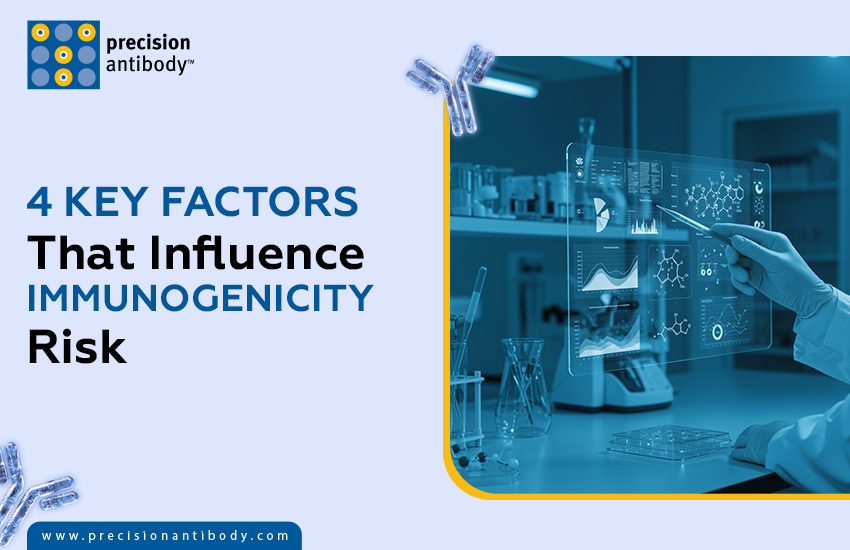
Immunogenicity risk in antibody therapeutics depends on a combination of molecular design, manufacturing precision and clinical use conditions. Even well engineered antibodies can trigger immune responses if critical factors are overlooked during development. By grasping these factors scientists can proactively manage risks, ensuring safety in treatments and reliable biological outcomes.
The sequence of the antibody impacts how well it triggers an immune response. Non human sequences, like those from mice or chimeras, make it more likely for the immune system to recognize them. Fully human antibodies are preferred because they closely resemble natural human immunoglobulins which reduces immune activation and enhances long-term tolerance in patients.
When proteins aggregate or misfold, they can reveal hidden parts that the immune system sees as foreign. So, these structural changes usually pop up during expression, purification or storage which can really increase the risk of immunogenicity and mess with the stability and bioactivity of antibodies.
Antibody formulations need to keep their molecular integrity as time goes on. Poor pH, temperature or buffer conditions can cause chemical breakdown and aggregation, increasing immunogenicity. Stability optimized formulations are key for keeping antibody structure intact and ensuring therapeutic reliability.
How an antibody is delivered really affects its ability to trigger an immune response. Subcutaneous and intramuscular routes get antibodies to immune cells, boosting the chances of antigen recognition over intravenous delivery. The frequency and concentration of dosage play a role in how immune tolerance develops.

Reducing immunogenicity requires a proactive design strategy that integrates computational tools, structural insights and humanization technologies. Instead of waiting for immune responses to happen, scientists are now focusing on spotting and removing potential risks early in the discovery phase. This approach keeps each therapeutic candidate safe, effective and durable in living systems.
A solid plan to reduce immunogenicity uses various techniques to minimize the risk of immune recognition. From in silico screening to molecular humanization, these methods help create antibodies with high binding specificity while keeping immune activation low which is key for great clinical performance and patient safety.
At Precision Antibody, we start reducing immunogenicity risk right from the early stages of antibody development. We use cutting-edge tools, skilled human insight and thorough testing to create antibodies that work effectively with low immune response. This helps our clients speed up development while ensuring safety and quality.
Precision Antibody makes sure your therapeutic candidates are safe, stable and compatible with patients. Work with our experts to turn early antibody ideas into effective low-immunogenicity therapies that are set for clinical success.
Q1: What are the factors that affect immunogenicity?
There are many factors that affect an antibody’s immunogenic potential and each one changes how the immune system sees the molecule. The important things are:
Q2: What is the immunogenicity of an antibody?
The immunogenicity of an antibody denotes its capacity to provoke an immunological response upon administration to a patient. This happens when the body thinks the antibody is alien and makes anti-drug antibodies that can stop its impact, change how the medicine works or cause bad immunological reactions.
Q3: How can immunogenicity be improved?
You can reduce immunogenicity by using computer predictions and smart antibody design together. Some important strategies are