It is important to know how the antibodies react with their targets to develop therapeutics. Epitope binning and epitope mapping are two complementary approaches that display these interactions, but serve different purposes and offer different levels of detail. Although the two are used to determine the specificity of antibodies, their usage and resolutions vary greatly.
Epitope binning groups antibodies based on overlapping or competitive binding sites on the same antigen. The strategy assists researchers to determine which antibodies can be competing with each other and prioritize candidates for further development, thereby simplifying the library screening process and speeding up the process of identifying lead therapeutic molecules.
In contrast, epitope mapping provides detailed, high resolution information about the exact amino acids or structural regions recognized by an antibody. It is this insight that contributes to rational design, optimization and combination strategies that allow teams to gain an insight into mechanisms of action and to prevent the cross-reactivity that may occur.
Do you wonder how the two strategies can make your antibody discovery experience a paradigm shift? Dive into our full blog to explore practical applications, real world examples, and tips for leveraging epitope binning and mapping to accelerate your therapeutic pipeline.
An epitope is the specific part of an antigen that an antibody recognizes, usually a short sequence or structure. It’s essential to identify and understand these regions because the epitope influences how well an antibody binds, its potential for cross-reactivity, and its overall effectiveness in therapy during preclinical and clinical stages.
Understanding epitopes is key in finding antibodies, helping choose the right candidates, and improving their strength and shape combination approaches. Understanding how epitopes interact allows researchers to foresee results, minimise unintended effects, and create better antibodies for practical use.
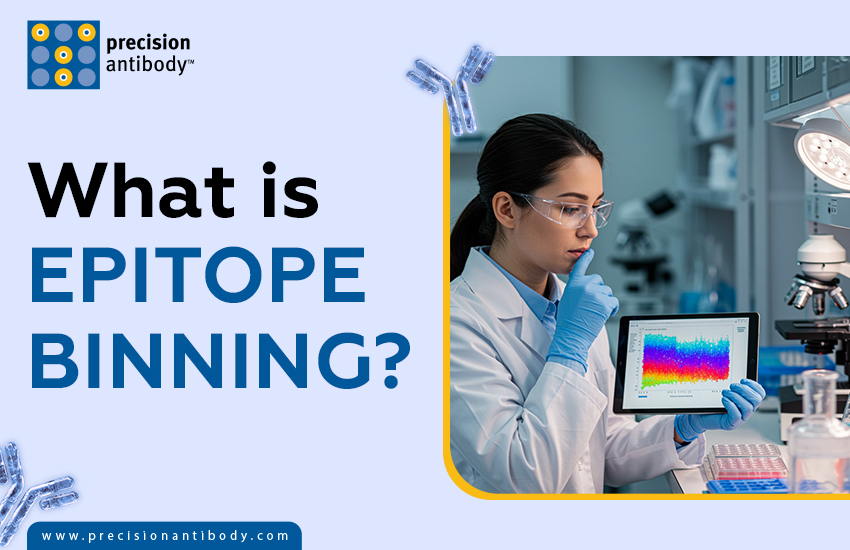
Epitope binning is an antibody characterization technique used to categorize antibodies according to competitive binding behavior with a particular antigen. Identifying those antibodies that block or share binding sites can be used to categorize candidates into functional bins, facilitate the process of selection and focus leads with unique or non overlapping binding characteristics as therapeutic targets.
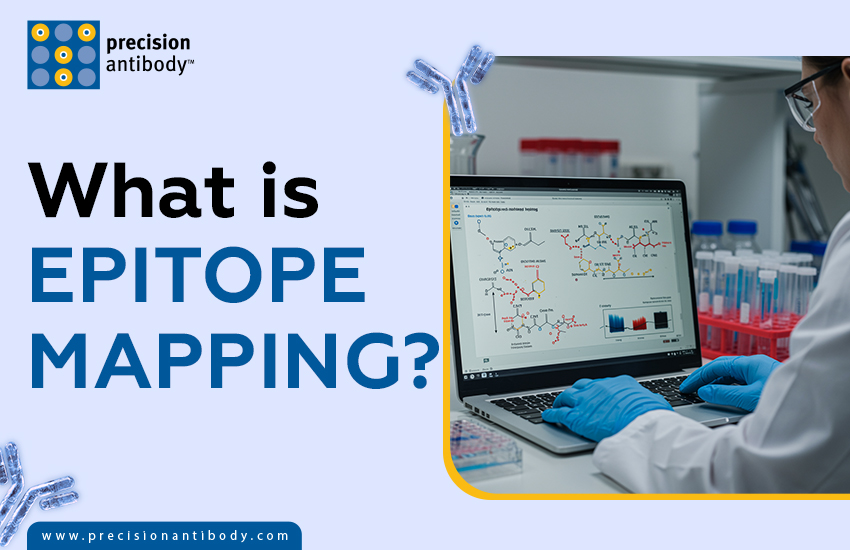
A high resolution method is known as epitope mapping, which determines the exact areas or amino acids of an antigen bound by an antibody. It can be used to reveal precise binding sites to support more insight into antibody specificity, rational design, and optimization to enhance efficacy, minimize cross reactivity, and guide therapeutic choices.
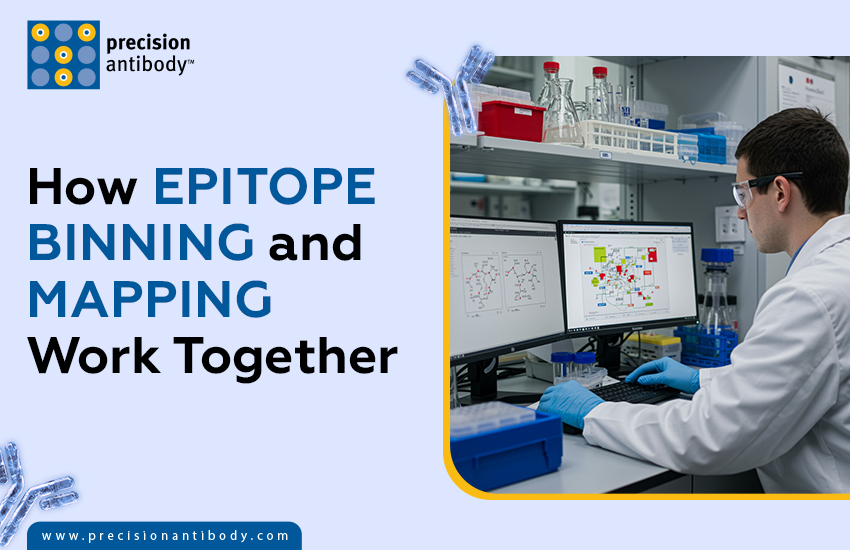
Epitope binning and mapping work together in antibody discovery, offering functional grouping and detailed binding insights. Binning quickly sorts antibodies by their competitive interactions and mapping identifies precise binding sites. When combined, these strategies speed up lead selection and cut down on redundancy in big antibody libraries.
Bringing together data from binning, binding kinetics and epitope mapping gives a complete picture of how antibodies behave. Researchers can focus on candidates based on their unique binding profiles, functional relevance, stability and therapeutic potential, helping to make informed decisions during development.
Precision Antibody collaborates with discovery teams to create tailored epitope characterization strategies that align with specific targets, modalities and program objectives. Our scientists combine binning and mapping methods to deliver insights that aid in lead selection, cut down on redundancy and speed up antibody development.
Use customized epitope characterisation to get the most out of your antibody discovery campaign. Get in touch with Precision Antibody to learn how customized binning and mapping procedures may help you choose the best candidates, make them more selective and speed up the creation of high-quality therapeutic antibodies.
Q1: When should epitope binning be used in antibody discovery?
Epitope binning is to be employed at an early stage of the discovery procedure after preliminary binding candidates have been discovered. It aids in clustering antibodies according to overlapping or competitive binding sites and enables researchers to give preference to distinct candidates, minimize redundancy and take wise decisions before putting in high-resolution characterisation or functional experiments.
Q2: Should epitope binning and mapping be used together?
Yes, using binning and mapping together provides complementary insights. Binning quickly categorizes antibodies based on competition, while mapping identifies the precise binding sites at amino acid or structural resolution. Collectively, they provide a full overview of specificity, direct rational selection of candidates and minimize the danger of cross reactivity or redundancy in the development pipeline.
Q3: Can Precision Antibody support epitope binning?
Absolutely. Precision Antibody provides the end-to-end support of epitope binning. Our team creates personalised plans that fit your aims and program goals, combines data from different methodologies and gives you useful information that speeds up the discovery of antibodies, improves lead selection and makes translational outcomes better.