
Antibody purification is more than just a checklist item in the production process it’s a crucial step that affects how well an antibody will perform over time. When it comes to preserving antibodies for research, diagnostics or therapeutic development, the purity is very important for how long they last and how stable they are.
If you don’t purify them properly even the best antibodies can break down more quickly or lose their effectiveness. This might happen because of things like proteins, endotoxins or residual buffer residues. These difficulties aren’t only about stability; they can mess up tests, change conclusions and waste valuable samples.
To keep your reagents safe and effective, you need to know how purification affects long-term performance. Using the appropriate methods helps stop degradation and keeps pollutants from changing the results. This manner you can achieve results that are more reliable and can be repeated, even after a long time in storage.
Want to discover how purification makes antibodies stay longer and work better? Stay with us we’re going to explain everything.

Purification does more than just clean up your sample it also keeps the antibody safe for a long time. When things like host proteins, enzymes or bacterial contaminants stay in the mix, they can slowly degrade your antibody or even cause it to clump, leading to results that change over time.
On the other hand, a well-purified antibody is better able to tolerate long term use, freeze-thaw cycles and storage stressors. You’re not only making the antibody more pure by getting rid of undesired parts early on but you’re also making it work better and last longer.
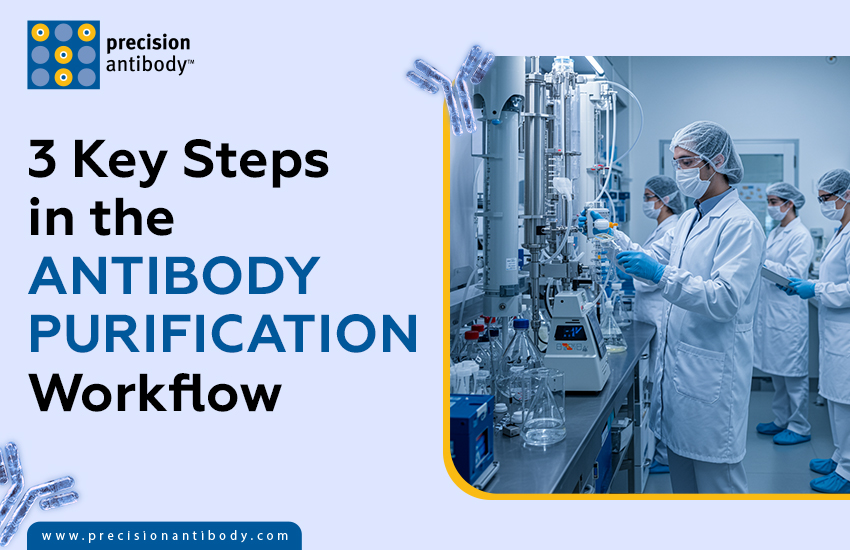
Purifying an antibody isn’t just one thing it’s a series of carefully thought-out actions that make sure the protein is clean, works and is ready to be used for a long time. Each step targets a different type of impurity, from host cell proteins to aggregates, to help keep the antibody’s structure and function stable.
Researchers follow a specified set of steps to make sure that the product is both very pure and stable over time. Every stage builds on the last, starting with collecting the antibody, then refining it and ultimately fine-tuning the buffer. This makes a firm base for reliable storage and repeatable results in experiments.
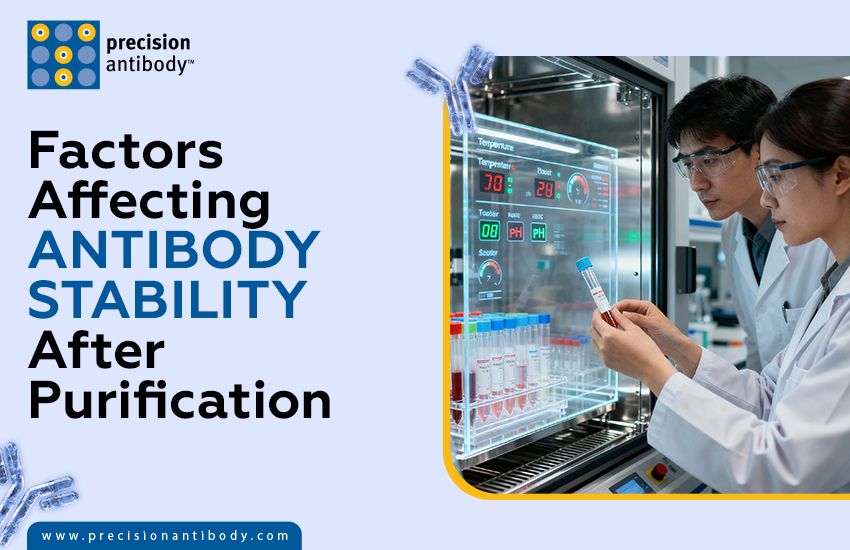
An antibody’s stability is not assured even after rigorous purification. There are several factors that can affect how well it keeps its shape and how it performs over time. pH, temperature and leftover contaminants are all important factors that affect whether an antibody stays active or starts to break down.
To make sure that antibodies work well over time it’s necessary to know what factors can affect their function. Monitoring these elements and checking for residual impurities through antibody characterization helps guide decisions about storage, buffer selection and handling, directly impacting how well the antibody works in experiments or therapeutic applications:

Even with a carefully thought-out purification process, some mistakes can make an antibody less stable. Antibodies can clump together, break down or lose their activity over time if they are exposed to severe environments, skip important polishing stages or are not handled properly.
Researchers can avoid stability problems before they influence studies by being aware of these typical mistakes. Antibodies can keep their integrity and give consistent, reliable results by avoiding severe environments, making sure they are thoroughly polished and carefully controlling buffer transitions and storage.

At Precision Antibody we use well crafted purification processes to guarantee that each antibody achieves top-notch purity and lasting stability. Every step from capture to polishing and formulation, is carefully crafted to maintain structural integrity, reduce contaminants and ensure antibodies are ready for dependable storage and consistent results in experiments.
Find out how these strict steps ensure antibodies stay active and reliable so that your tests and therapeutic applications always give you dependable, consistent results.
Q1: Why is antibody purification important?
Antibody purification is a crucial step because it gets rid of things like contaminants, aggregates, and proteins from host cells that might change how well an antibody works. A purified antibody is more stable, consistent, and dependable, which makes investigations go more easily and gives researchers or doctors the same results every time.
Q2: How to improve antibody stability?
Antibody stability can be improved by paying attention to multiple factors. When antibodies are stored in the right buffers, at the right temperatures, and away from repeated freeze-thaw cycles, they stay stable longer. Over time, keeping their structure and functional activity intact is also helped by getting rid of impurities and utilising the right formulation processes.
Q3: How do you store antibodies long-term?
Long-term storage requires careful planning. Stability-optimized buffers are used to store antibodies for a long time at –20°C or –80°C. To keep activity and make sure the stocks can be used reliably in future experiments, it’s best to divide them into small aliquots, mark them neatly, and keep the temperature changes to a minimum.