
Hybridoma technology is still one of the go-to methods for producing monoclonal antibodies. At the heart of this process are myeloma cell lines unique immortal cells that allow for the fusion and lasting survival of antibody producing B cells. They are essential for making reliable monoclonal antibody production a reality.
The most important thing about myeloma cells is that they may divide forever and still generate antibodies. After they merge with B cells, these hybrid cells keep growing and making antibodies all the time. This is a big benefit for both research and drug development.
Choosing the correct myeloma cell line and knowing what it does can directly impact the quality and quantity of antibodies. If you want to be successful with hybridomas, you need to grasp how myeloma cells act whether you’re doing it for the first time or refining your current operations.
Do you want to know how these cells help make antibodies based on hybridomas? The science gets even more interesting from here, so keep reading.
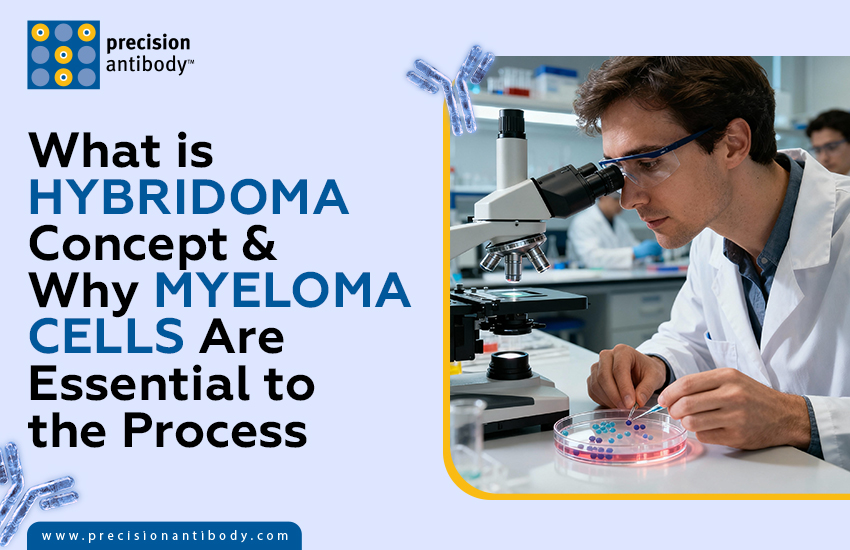
The hybridoma concept makes it possible to make monoclonal antibodies by combining a B cell that makes antibodies with a myeloma cell that never dies. This makes a hybridoma that can make the same antibodies and keep dividing forever which means that large scale production is achievable without losing specificity.
Myeloma cells are very important because they provide hybridomas the immortality they need to live and keep making antibodies. Myeloma cells keep dividing while B cells die fast. They are also chosen such that they don’t make their own antibodies, which makes sure that just the appropriate monoclonal antibody is made.
Myeloma cell lines are specifically designed to facilitate effective hybridoma development and monoclonal antibody synthesis. Hybrid cells are durable, productive and particular because of their biological and genetic features. Antibody development procedures are directly affected by key traits including not secreting and genetic stability.
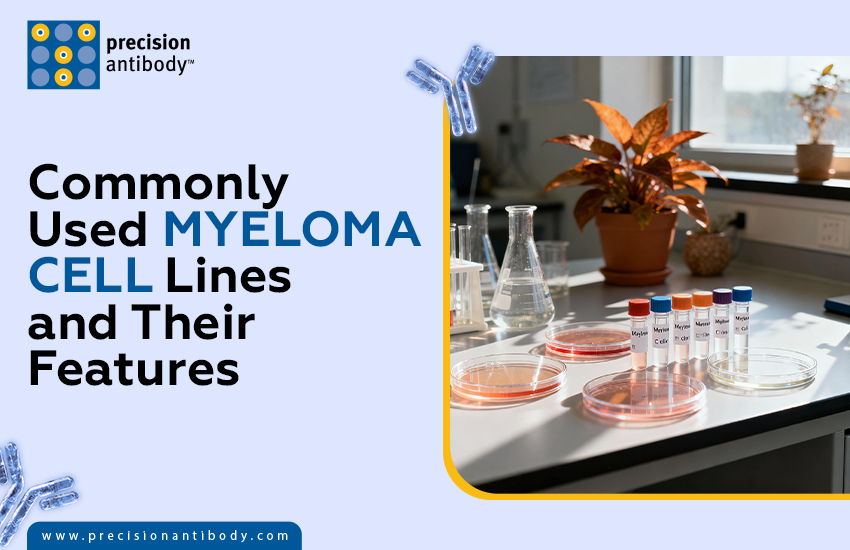
Various myeloma cell lines play a key role in hybridoma technology each chosen for unique traits that enhance monoclonal antibody production. Their selection is based on how well they work with B cells, their growth traits and their intended use. Understanding their features helps researchers choose the best line for reliable, effective antibody development.
| Cell Line | Species | Secretion Type | Key Advantage | Common Use |
|---|---|---|---|---|
| SP2/0-Ag14 | Mouse | Non-secreting | High fusion efficiency, widely used | General monoclonal antibody production |
| NS0 | Mouse | Non-secreting | Good growth in suspension, scalable | Therapeutic antibody development |
| P3X63Ag8 & Derivatives | Mouse | Non-secreting | Stable and easy to culture | Research antibodies and assay development |
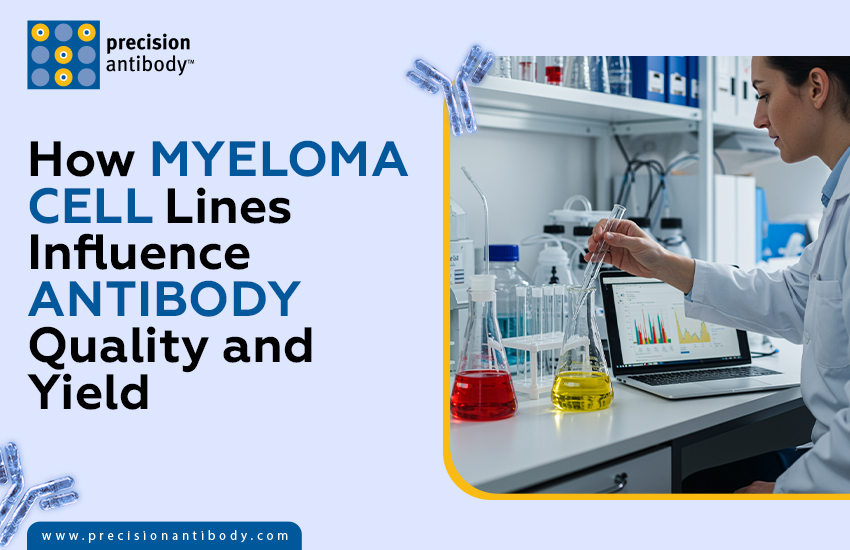
The quality of the antibodies made is directly affected by the myeloma cell line that is used for hybridoma development. Stable and well-defined lines facilitate the consistent secretion of highly specific antibodies by hybridomas hence minimising variability in research or therapeutic contexts. Poorly matched lines can make antibodies less accurate.
The yield of antibodies relies on how well the myeloma cells grow and survive. Strong lines that handle long culture times help hybridomas make more antibodies. On the flip side, unstable or incompatible lines can cause low secretion or loss of antibody activity so choosing the right ones is key for dependable monoclonal antibody production.

Precision Antibody provides innovative solutions to make your hybridoma development efficient and trustworthy. We guide researchers through the journey from cell fusion to creating stable hybridomas, helping them tackle the usual hurdles in monoclonal antibody production. Each step is carefully designed to ensure that antibodies remain specific, consistent and of high quality.
Work with Precision Antibody to get the best quality, yield and reproducibility of antibodies. We know a lot about hybridoma technology and how to choose the right myeloma cell line so we can make sure your monoclonal antibodies are of the greatest quality for research or therapeutic use.
Q1: What is the function of myeloma cells used in the production of monoclonal antibodies?
Myeloma cells give hybridomas the crucial ability to live and multiply endlessly. When combined with B cells that produce antibodies they form hybridomas that can consistently release a specific monoclonal antibody. This guarantees that antibodies are consistently high-quality, scalable and dependable for research, diagnostics or therapeutic uses.
Q2: What is the function of myeloma cells?
In hybridoma technology, myeloma cells serve as the enduring partner that ensures lasting growth and stability. These hybrid cells are designed to keep producing antibodies for a long time and are selected to prevent them from making their own antibodies so only the targeted monoclonal antibody is created.
Q3: What is the most commonly used cell line?