
Discovering antibodies often requires a balance between speed and depth. Octet and Biacore are both great platforms, but they have different strengths. Using each option precisely can save time, optimize your resources and give you correct results. Early decisions in screening and kinetic analysis set the foundation for successful antibody development.
High-throughput screening demands efficiency without sacrificing reliability. Octet systems allow researchers to evaluate hundreds of interactions quickly, offering real-time binding data and minimal sample preparation. It thus supports early detection, enabling teams to identify potential candidates quickly and to direct their energy toward the most likely therapeutic leads.
Kinetic analysis gives antibody optimization details. Biacore measures affinity, specificity, and delicate molecular interactions well. Despite a decrease in throughput, increased precision ensures that the candidates selected are well-characterized, enabling informed decision-making in later phases of research and providing more confidence for clinical applications.
Read on to learn how to combine Octet and Biacore to speed discovery while capturing important kinetics.
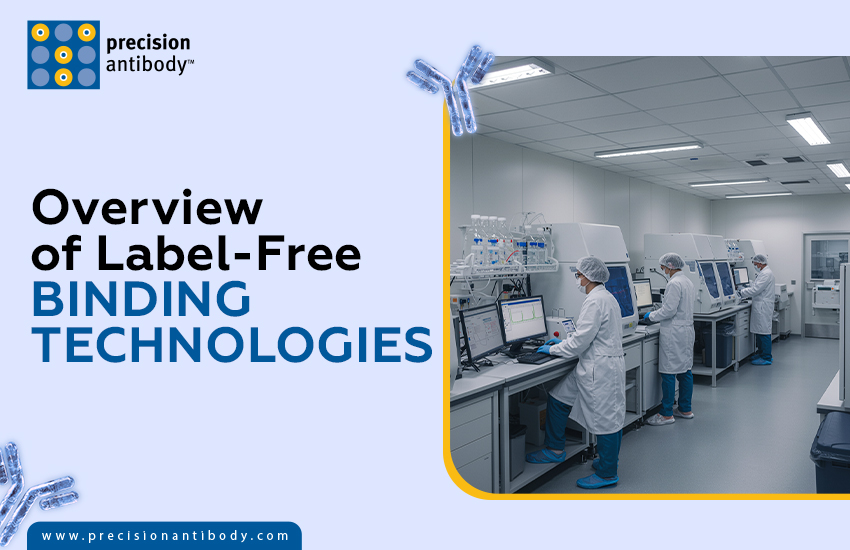
Researchers perform molecular binding interaction analyses free from labels and tags with a label-free interaction analysis platform that enables real-time observation.
Systems that produce authentic, high-fidelity data on antibody-antigen interactions by detecting changes in optical or physical properties help scientists make informed, effective choices during early discovery and candidate selection.
Each Octet and Biacore occupies a distinct niche in antibody discovery workflows. The use of Octet allows for the high-throughput screening of large libraries of antibodies, while Biacore provides kinetic profiles of leads. With help from each other, speed and precision play nicely together throughout development.
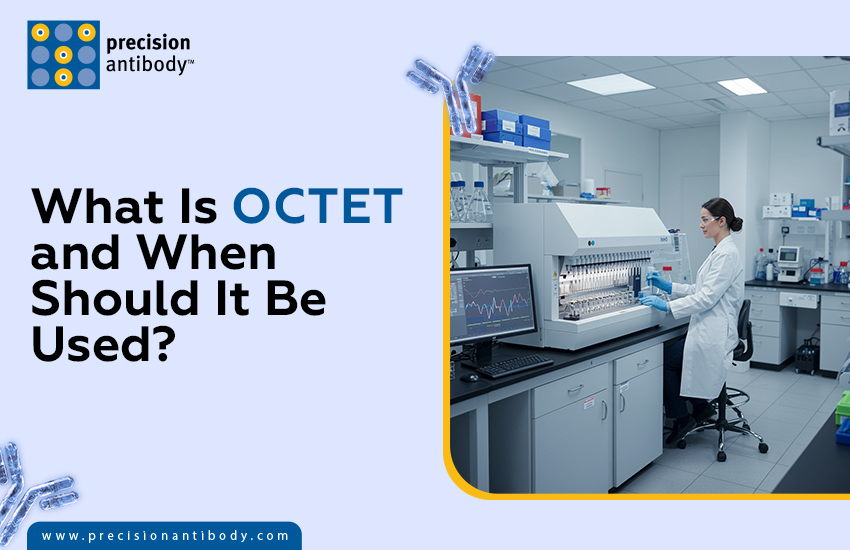
It is a facility for rapid antibody discovery. Octet is a label-free and high-throughput binding analysis platform. This allows for immediate monitoring of interactions and fast identification of good candidates. It is well-suited for quickly screening large panels without sacrificing data quality.
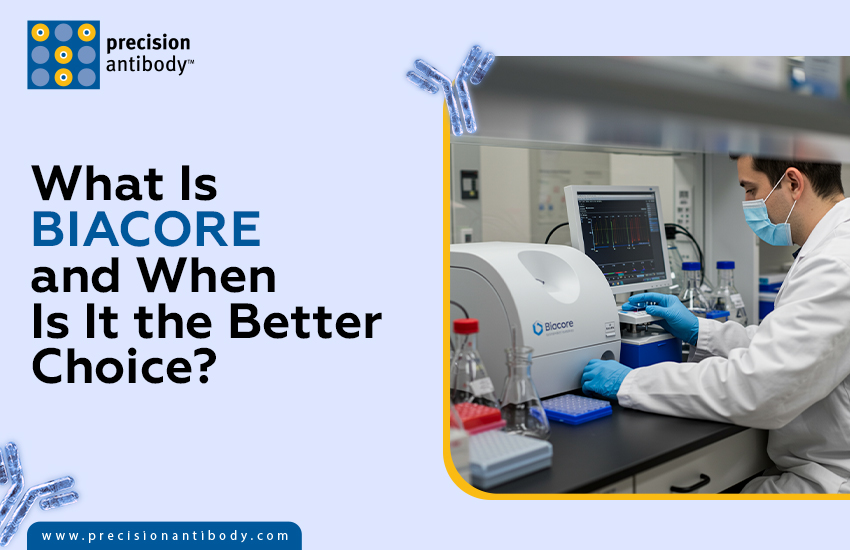
Biacore is a high-precision, label-free platform for kinetic characterization. As it provides precise measurements of binding affinity and interaction rates, it is essential for understanding molecular nuances. Biacore assists with lead optimization and later-stage antibody development decisions.

The choice between using Octet and Biacore depends on the stage of the antibody development project. Every stage requires unique optimization of speed and precision, while a well-chosen platform will ensure efficient screening, accurate characterization and confident candidate progress towards clinical success.
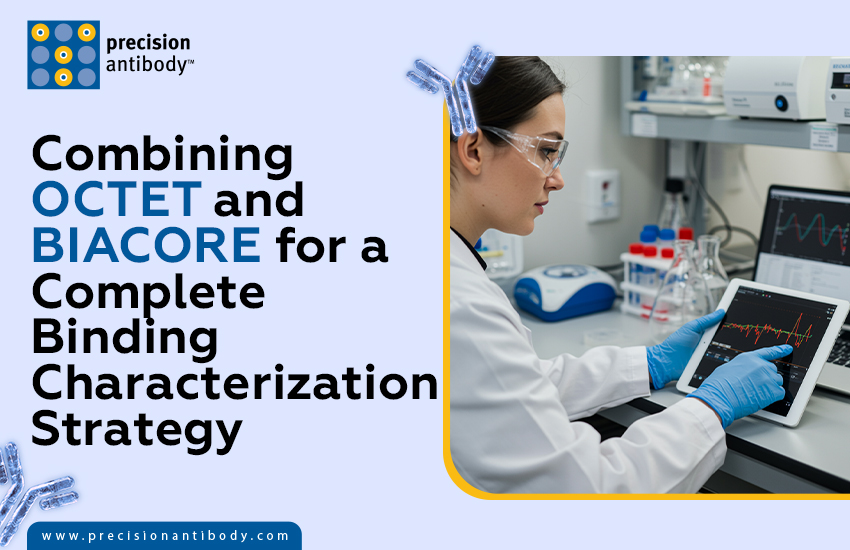
By joining forces, Octet and Biacore deliver the speed and precision of antibody discovery. Through the use of high-throughput screening in concert with in-depth kinetic analysis, one can identify, validate, and optimize candidates, thereby minimizing risk and making informed decisions on which antibody to move forward with.
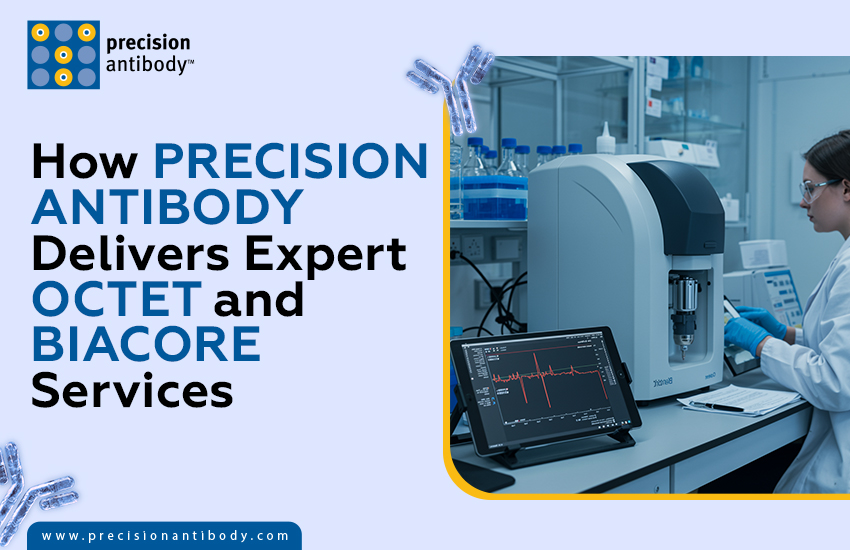
Precision Antibody helps researchers accelerate antibody discovery with accurate, high-quality data through a range of services for Octet and Biacore. By carefully following the project’s specific requirements, the expert team delivers a balance of speed and precision. Also, the specialist team offers insightful analysis at every step of the way for confident decision making.
Discover how Precision Antibody partners with your research team to design tailored Octet and Biacore strategies. From early screening to advanced kinetic validation, their expertise helps reduce uncertainty, strengthen data confidence and move your most promising antibody candidates forward with clarity and precision.
Q1: Can Octet and Biacore data be directly compared?
The Octet and Biacore measure binding differently, so one must be careful when comparing the two. Biacore gives kinetic parameters; Octet can do high-throughput ranking. Although the trends may align, differences in results can be due to differences in sensitivity, fluidics, and quantification methods. Strategies in tandem provide complementary insights.
Q2: Does sample quality affect Octet and Biacore results differently?
Yes, the quality of the sample affects both of them, but in different ways. While Octet provides readiness screening results, it can tolerate a slightly lower sample purity. Biacore, on the other hand, requires highly pure, well-characterised samples for accurate measurement of their kinetics. In both systems, reliable and reproducible data are obtained through consistent sample preparation.
Q3: Can Octet provide reliable affinity data, or is Biacore always required?
The octet allows estimation of an affinity that can range from moderate to high. This is helpful for early screening. αNevertheless, Biacore is the gold standard for kon, koff, and KD measurements, especially for low-affinity or fast-off-rate interactions. Using both together allows efficiencies and accuracy in discovery.