Fully human monoclonal antibodies are redefining biologics as they address issues in safety and efficacy in novel therapy development. They closely mimic naturally occurring human antibodies, which greatly lowers the risk of immunogenicity while allowing for precise target engagement. This makes them popular for next generation drug pipelines.
Regulatory expectations and patient safety standards are tightening, so developers must create antibodies that function consistently across all groups of people. Fully human antibodies are more tolerated, pharmacokinetics consistent and reliable in clinical trials. This helps with the easier transition from discovery to late-stage development and commercialization.
In addition to being safe, the use of fully human monoclonal antibodies opens up new potential not only for being stronger, but also for having a longer-term effect as a therapy. Their optimised interaction with human immune processes leads to better functional activity, flexibility of dosing and breaks to treatment, making biologic medicines more successful and patient-centred.
As we go through their main scientific and clinical benefits in the next sections, find out how completely human monoclonal antibodies improve drug safety and effectiveness.
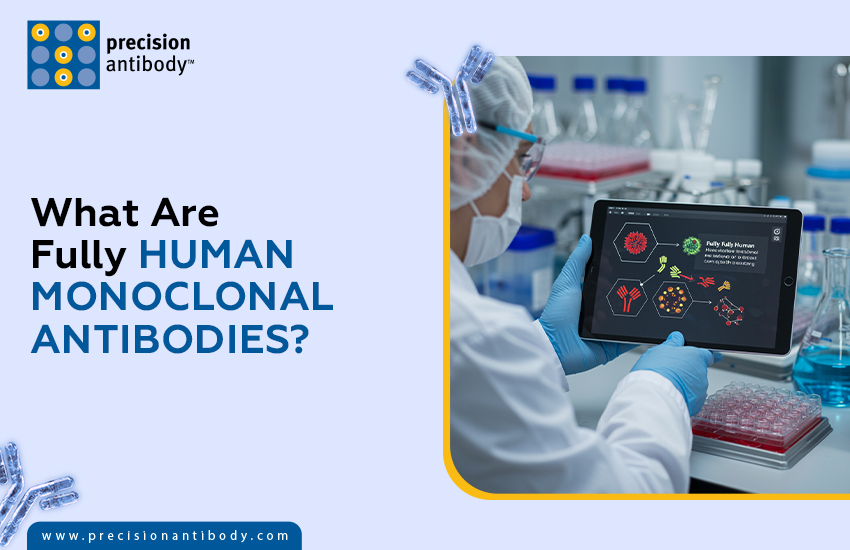
Fully human monoclonal antibodies are laboratory engineered antibodies whose protein sequences are entirely derived from human immunoglobulin genes. Unlike murine or humanized antibodies, they do not contain any non-human constituents which enables them to closely emulate the natural immune reactions and at the same time combine with high specificity to the therapeutic targets.
These antibodies are typically generated using advanced platforms such as transgenic animals or display technologies that produce fully human antibody repertoires. As a result they are showing to be much better compatible with the human immune system, making them very suitable for therapeutic use and for repeated dosing in a clinical setting.
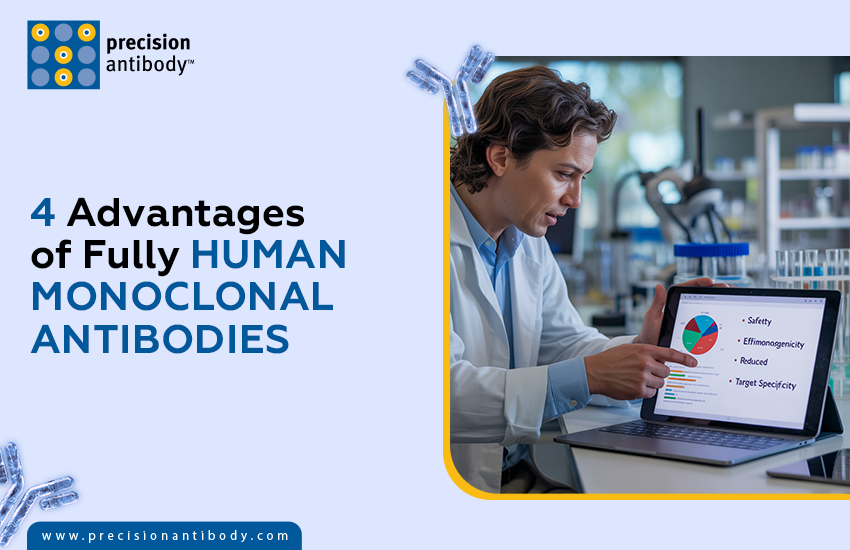
Fully human monoclonal antibodies have a strategic edge throughout the drug development lifecycle in terms of their balance of being biologically compatible with strong clinical performance. Their human-derived structure enables safer dosing, reliable efficacy, scalable manufacturing, and sm oother regulatory progression making them a more popular therapeutic modality for programs aiming to achieve long-term clinical and commercial success.
The subsequent sections describe the importance of fully human monoclonal antibodies in improving performance, development, production and regulation.

Choosing a fully human antibody platform requires careful alignment of scientific goals, clinical goals, and operational limits. Evaluation of critical factors early in the development process helps reduce technical risk, support decision making and ensure that the platform of choice is capable of sustaining safe, effective and scalable therapeutic programmes throughout the clinical and commercial phases of development.
Precision Antibody works with drug developers and meets the needs of developing fully human monoclonal antibody programs with focus on safety, efficacy and developability. By combining scientific expertise and flexible and client-specific workflows, we help to de-risk key stages of antibody discovery and development while aligning solutions with your specific therapeutic and translational goals.
Whether you are building out early discovery decisions or progressing towards clinical milestones, Precision Antibody has the expertise and support to drive fully human monoclonal antibody programs forward with confidence.
Q1: When are fully human monoclonal antibodies the best strategic choice?
When long-term safety, recurrent dosing and patient applicability are important, fully human monoclonal antibodies are optimal. They are especially beneficial in chronic diseases, oncology and immunology indications where decreasing immunogenicity leads to lessening of treatment interruptions and better tolerability and can aid in maintaining clinical efficacy in a wide range of patient groups.
Q2: Why do monoclonal antibodies need to be humanized?
Monoclonal antibodies initially obtained from (non-human) sources such as mice can cause immune reactions once given to patients. These non-human components are reduced through humanization to improve compatibility with the human immune system. This process reduces the risk for anti drug antibody formation, improves pharmacokinetics and improves the chances of clinical and regulatory success.
Q3: What is the difference between humanized and fully human monoclonal antibodies?
Humanized monoclonal antibodies contain a few non-human sequences within an otherwise human monoclonal antibody while fully human monoclonal antibodies consist entirely of a human immunoglobulin sequence. As a result fully human antibodies generally offer lower immunogenicity risk, improved tolerability and greater suitability for long term or repeat dosing than humanized antibodies.