
By 2025 sustainability will be central to antibody manufacturing. Researchers are looking into eco friendly cell culture methods and ways to cut down on waste in purification to develop biologics. The aim is to produce high quality therapeutic antibodies efficiently and responsibly adapting to the evolving biotech landscape.
Sustainability isn’t just about cutting down on waste it’s really about building resilience. So continuous bioprocessing, renewable materials and energy efficient tech are helping manufacturers go green. It’s a win-win situation because they’re saving money and sparking innovation at the same time. Good practices can really enhance business success and drive scientific progress.
Technology is shaking things up in antibody production. Innovations like AI, digital twins and modular facilities are making the process smarter and cleaner. We’re seeing faster optimisations, less resource consumption, and operations that scale smoothly. Manufacturing is entering a thrilling time emphasising sustainability and preparing for future healthcare needs.
Read on to see how new technologies in 2025 are making it harder to make antibodies in a way that is good for the environment. Companies like Precision Antibody are leading the way to a cleaner and smarter future.
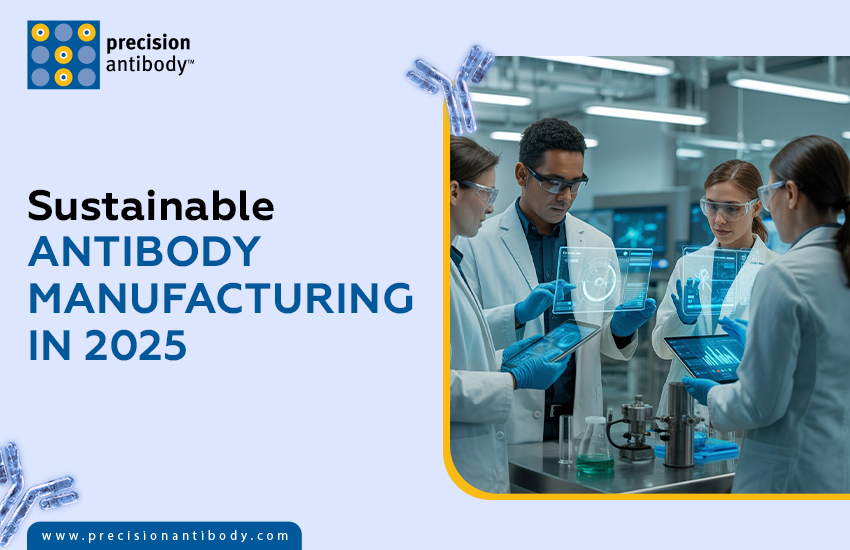
Antibody manufacturing needs to focus on sustainability. With the global demand for biologics on the rise along with increasing production costs and environmental challenges, sustainable practices are becoming crucial for long term success. Manufacturers can boost efficiency and save money while also being kind to the planet by optimising resources and cutting down on waste.
Bioprocessing usually uses a lot of energy to keep things sterile, cool and agitated. Manufacturers are using energy efficient bioreactors and real time process controls to cut down on kilowatt hour use per gram of antibody produced. This not only lowers operational costs but also helps meet global climate goals.
Modern purification workflows focus on saving water with closed loop systems and better buffer formulations. These innovations reduce the need for freshwater and manage waste, helping producers monitor water use for each batch while achieving sustainability goals without sacrificing antibody purity or yield.
Chromatography resins and single use plastics really add to production waste. New strategies for resin regeneration and recyclable single use systems are boosting resin lifespans and improving recycling scores. This cuts waste and lowers the cost per gram of antibody, balancing both economic and ecological benefits.
Sustainability metrics now cover everything from raw materials to packaging in antibody production. Manufacturers can use digital tracking tools and AI dashboards to keep an eye on energy, materials and logistics. This helps them stay transparent and improve at every step of the process.
Companies who use well-known global standards for ESG and sustainability reporting, like GRI, SASB or CDP are getting ahead of the competition. These frameworks show that the climate is getting better, provide investors more confidence and fit with stricter rules in the biopharmaceutical manufacturing sector.
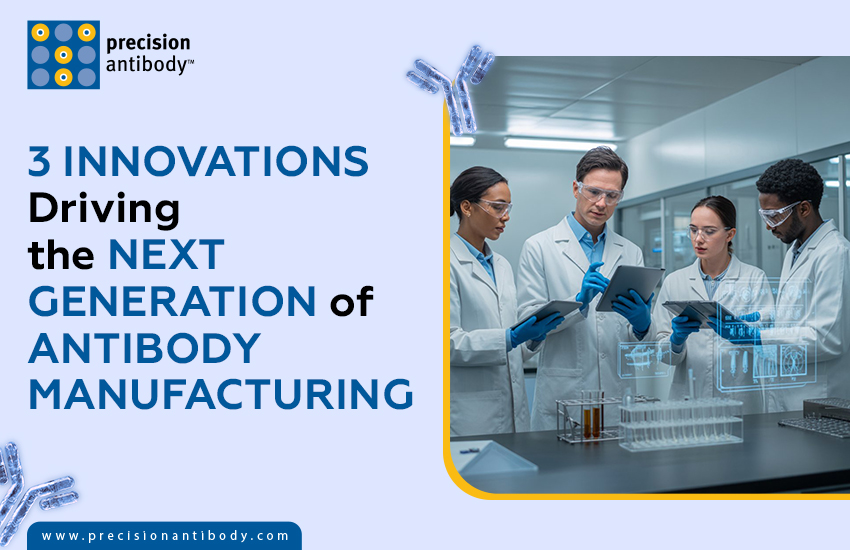
Innovation is transforming antibody manufacturing, speeding up the process, making it cleaner and allowing for greater flexibility. With the rising demand for biologics, manufacturers are discovering innovative ways to combine efficiency with attention to detail. These enhancements not only increase production but also transform the way therapies are developed and provided globally.
Today manufacturers are creating systems that anticipate needs. Thanks to innovative tools, adaptable spaces and eco friendly materials, antibody production is entering a new age of efficiency. Here are three groundbreaking innovations that are shaping the future of biologics.

With sustainability at the forefront, 2025 is set to be a pivotal year for antibody manufacturing in biopharmaceuticals. We’re moving from just quick results to focusing on long-term efficiency. It’s all about combining energy, materials and data to create smarter, leaner and more eco friendly production systems that responsibly meet global healthcare needs.
The technique of making antibodies is changing to be more environmentally friendly by emphasising on process design and reusing materials. New technologies are changing the way we make, improve and grow biologics. These are five major themes that will affect how the industry balances innovation, performance and environmental responsibility in 2025 and beyond.
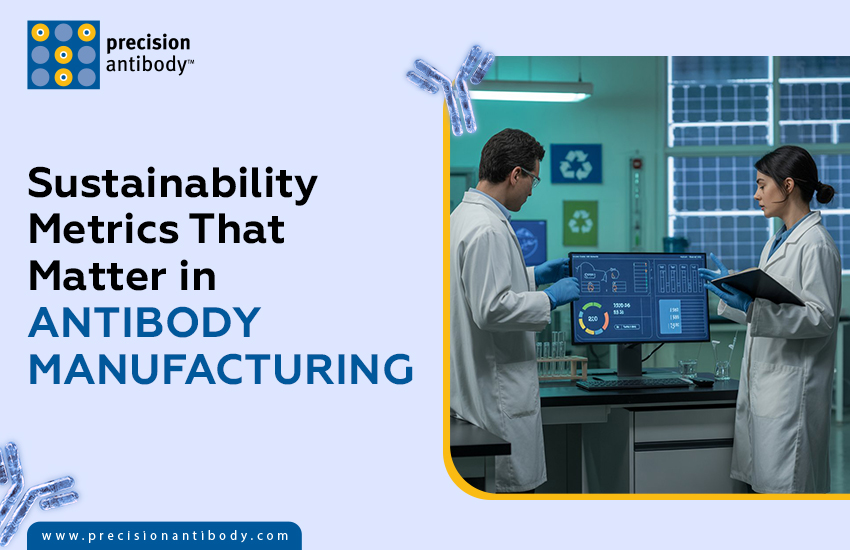
Sustainability must be quantified to hold significance. There are more than only yield and purity that are important for making antibodies. Companies look at how their actions influence the environment and how well they run. This ensures that their progress is obvious, backed by evidence and in line with what investors and global rules demand.
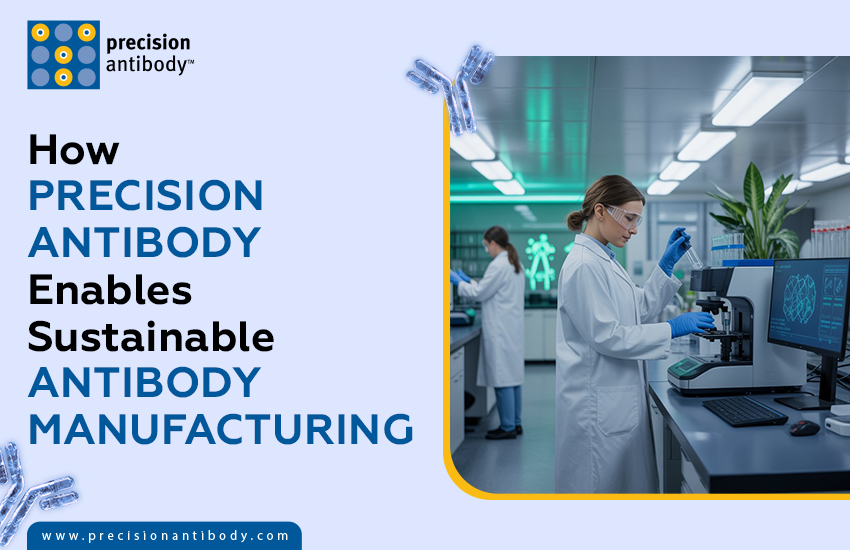
At Precision Antibody we integrate sustainability into every step of our antibody development and production process. We assist our partners accomplish scientific excellence while being ecologically responsible by managing resources efficiently, using data to improve and keeping devoted to innovation. This creates a future where performance and sustainability go hand in hand.
Join forces with Precision Antibody to thoughtfully enhance your biologics pipeline. We bring together our technical know how and a commitment to sustainability to help you create, grow and provide therapeutic antibodies that address current needs while preserving resources for the future.
Q1: What are the technologies for monoclonal antibody production?
Bioreactors, purification tools and analytical testing are all used to make modern antibodies. They all work together with advanced cell systems like CHO and HEK293. Scientists are now able to create monoclonal antibodies at a larger scale that are safer, cleaner and more consistent thanks to new approaches including single-use bioprocessing, real-time monitoring and continuous manufacturing.
Q2: How to improve antibody production?
To boost antibody production we need to enhance cell line productivity, refine feed strategies and adjust culture conditions. Automation and AI analytics help us control processes accurately and continuous bioprocessing boosts yield and consistency. Using energy efficient equipment and hybrid bioprocess systems enhances performance and reduces waste and environmental impact.
Q3: How does continuous processing reduce environmental and operational costs?
Continuous processing brings together upstream and downstream steps into a smooth flow, removing any downtime between batches. This method cuts down on buffer and water use, saves energy and maintains quality consistently. The outcome is a more efficient, eco friendly and budget friendly operation that aligns with today’s sustainability goals in antibody production.